Trying to read a home’s style as you tour Point Loma? You’re not alone. From tile‑topped Spanish Revival to glassy Coastal Modern, the peninsula blends a century of architecture in one place. If you want the right home for your lifestyle and long‑term comfort, understanding design cues and coastal durability is key. This guide shows you how to recognize local styles, spot quality, and plan smart inspections and upgrades. Let’s dive in.
Why architecture matters in Point Loma
Point Loma grew in waves. Early cottages and Craftsman bungalows anchored the first neighborhoods. The 1920s and 1930s brought a surge of Spanish Colonial Revival and Mediterranean Revival that still shapes the area’s character. After World War II, single‑story Ranch and Mid‑Century Modern homes embraced indoor and outdoor living. More recently, larger Contemporary and Coastal Modern builds arrived through infill and rebuilds.
Local geography also plays a role. Coastal bluffs, marine air, and sun exposure demand durable materials and ongoing maintenance. Liberty Station, the former Naval Training Center, stands out as a major adaptive reuse area that preserves Spanish Colonial Revival buildings and sets a strong architectural tone.
Key styles you will see
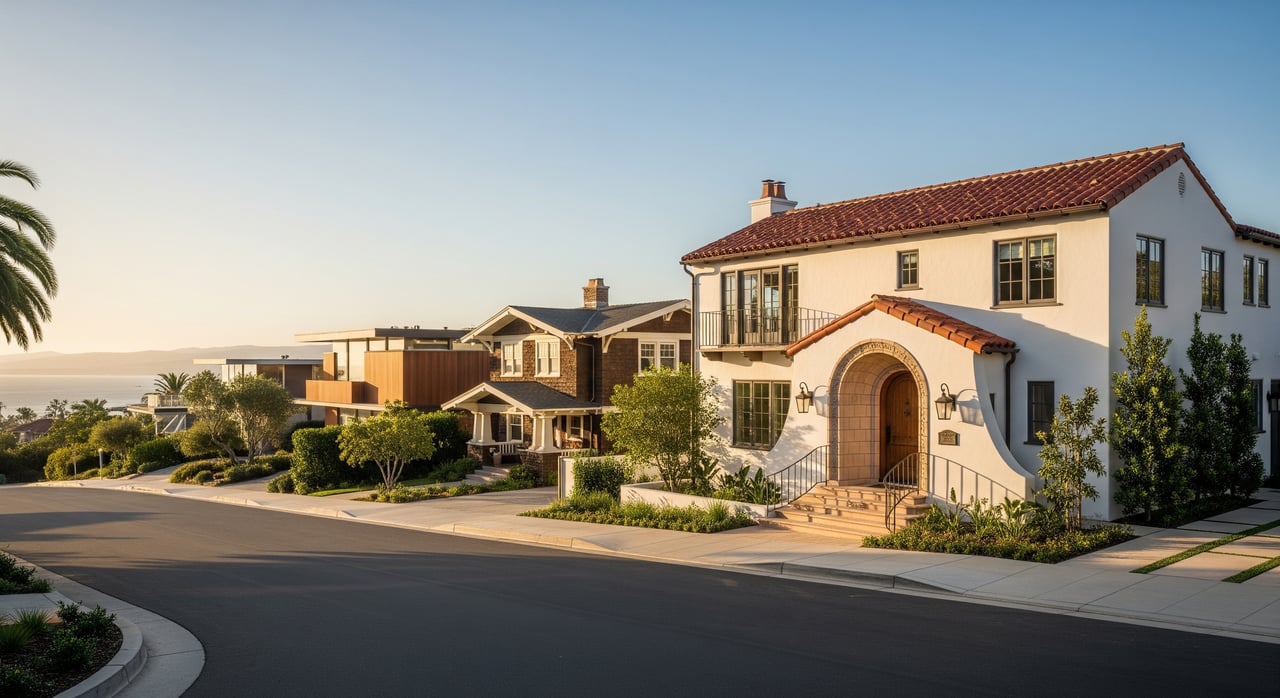
Spanish Colonial Revival and Mediterranean
- Defining features:
- Stucco walls and red clay tile roofs
- Arched doors and windows, arcades, and wrought‑iron balconies
- Courtyards, loggias, and tiled entries that connect indoors and outdoors
- Interior cues:
- Plaster walls, beamed or exposed wood ceilings, small‑pane casement windows, decorative tile
- Where in Point Loma:
- Widespread across the peninsula, with notable ensembles in areas such as Liberty Station
- Buyer watch‑outs:
- Hairline stucco cracks and moisture behind stucco
- Heavy clay tiles require proper roof framing and attachment
- Original single‑pane wood windows may be drafty and need restoration
- Historic ironwork and tile can be costly to repair or replicate
California Bungalow and Craftsman
- Defining features:
- Low porches with tapered columns or exposed rafter tails
- Wood siding or shingles, substantial porch piers, and warm natural materials
- Efficient floor plans with a fireplace as a focal point
- Interior cues:
- Built‑ins, hardwood floors, thick trim and molding, plaster or early drywall
- Where in Point Loma:
- Older streets and early residential pockets in areas such as Loma Portal, Roseville‑Fleetridge, and Old Point Loma
- Buyer watch‑outs:
- Pier‑and‑beam foundations with potential sill and joist deterioration
- Outdated wiring like knob‑and‑tube and non‑insulated walls
- Enclosed porches or add‑ons that may have altered natural light and flow
Mid‑Century Modern and Ranch
- Defining features:
- Horizontal lines, large windows, clerestories, and open plans
- Low‑pitched or flat roofs, carports, and direct yard access
- Floor‑to‑ceiling glass oriented toward views
- Interior cues:
- Minimal ornament, built‑in shelving, combined living and dining spaces
- Where in Point Loma:
- Pockets across the peninsula, often sited to capture ocean or bay views
- Buyer watch‑outs:
- Salt‑air corrosion on metal frames and original single‑pane glass
- Low‑slope roof ponding and membrane wear
- Piecemeal remodels that compromise original spatial clarity
Coastal Modern and Contemporary
- Defining features:
- Clean lines, expansive glazing, and strong indoor‑outdoor flow
- Mixed cladding like cement board, metal panels, engineered wood, and glass
- Open floor plans with high ceilings and decks or terraces
- Interior cues:
- Minimal trim, modern kitchens and baths, engineered materials, updated systems
- Where in Point Loma:
- Infill and rebuilds where older cottages were replaced to maximize views
- Buyer watch‑outs:
- Cost‑driven details that may reduce durability
- Solar gain and condensation risk with large glass areas; confirm tempered or treated glazing and shading
- Permitting, height, and view considerations in rebuilt parcels
Vernacular and Naval influences
- Defining features:
- Simple cottages near historic maritime and military areas
- Institutional Spanish Colonial Revival structures in Liberty Station and some utilitarian buildings adapted for new uses
- Buyer watch‑outs:
- Conversions can include thick masonry or unique structural conditions
- Historic rules may guide exterior changes and materials
Read craftsmanship at a glance
Structure and fundamentals
- Foundations: A sound concrete perimeter or slab is a good sign. Pier‑and‑beam systems can work well but need checks for termite activity and rot at sill plates.
- Roof structures: Visible heavy timber, original rafters, and tight connections suggest durability. Look for water stains in attics and at ceiling junctions.
- Stucco and masonry: Well‑adhered stucco with neat flashing at windows and roofs hints at quality. Extensive patching may hide moisture issues.
- Woodwork and joinery: Solid wood doors, dovetail or mortise‑and‑tenon joinery, and intact built‑ins signal preserved craftsmanship.
Envelope and materials
- Windows: Original steel or wood casements define character but often need refurbishment. Vinyl replacements can improve performance but may change historic appearance.
- Flooring: Original hardwood in good condition is a positive sign. Uneven floors or large patches may point to subfloor or foundation issues.
- Doors and millwork: Original hardware, thick casings, and plaster detail often indicate higher‑end finishes.
- Roof coverings: Clay tile lasts for decades with proper underlayment. Newer composition roofs can be fine if installed correctly.
Systems and modernization
- Electrical: Modern panels, grounded outlets, and 20‑amp circuits reduce risk and improve function.
- Plumbing: Copper or PEX upgrades are preferable to aging galvanized lines.
- HVAC: Newer systems with proper ventilation and condensate management suggest thoughtful updates.
- Insulation and ventilation: Attic insulation and roof ventilation improve comfort in older homes.
Coastal durability cues
- Exterior coatings: Marine‑appropriate paints, sealers, and stainless fasteners fight salt‑air wear.
- Drainage: Grading that directs water away from the house, well‑maintained gutters, and functional downspouts are essentials, especially near bluffs.
- Retaining and seawalls: If present, condition and maintenance history matter. Aging structures can be costly to address and may be regulated.
Common red flags and smart inspections
High‑priority inspections
- General home inspection by a professional with coastal experience
- Termite and wood‑destroying organism inspection
- Roof and attic inspections, especially for tile or low‑slope roofs
- Structural engineer review when there are signs of movement, major additions, or cliffside siting
- Sewer lateral camera inspection for older lines
- Geotechnical review for cliffside properties
Red flags on walkthroughs
- Musty odors, visible mold, or efflorescence on stucco and masonry
- Sloping or bouncy floors and doors that stick
- Visible termite activity or soft sills
- Freshly patched stucco around openings without documentation
- Corroded metal flashings or rust near gutters and coastal exposures
- Large unpermitted additions or conversions
Smart questions to ask
- What are the ages of the roof, HVAC, electrical panel, water heater, and sewer lateral?
- Has the home had water intrusion or structural repairs? Are permits and receipts available?
- Is there any historic designation or overlay that affects exterior changes?
- How often are exterior painting, deck sealing, or window maintenance needed near the water?
Renovation, permits, and historic status
Older homes often carry layers of updates. You want the right balance of authenticity and livability.
- Historic status: Some properties and areas, including parts of Liberty Station, follow preservation guidelines. Check city historic resources before planning exterior changes.
- Permits: Order a permit history or ask for the seller’s records. Unpermitted structural or electrical work can add cost and delays.
- Keep character, improve comfort: Preserve defining features like tile, woodwork, and windows when you can. Use reversible solutions such as interior storms or targeted insulation where feasible.
- Cost considerations: Foundation or structural work can be the largest expense. Tile roof work and window restoration range from moderate to high. Energy upgrades like insulation and HVAC can boost day‑to‑day comfort.
Match style to lifestyle
- If you love courtyards and texture: Spanish Revival or Mediterranean homes provide romantic entries, beamed ceilings, and intimate patios for daily outdoor living.
- If you value handcrafted detail: Bungalows and Craftsman homes offer warm materials, built‑ins, and efficient layouts that live larger than their square footage.
- If you want open plans and single‑story ease: Ranch and Mid‑Century homes deliver flow, natural light, and connection to yards and views.
- If you prefer light, volume, and minimalism: Coastal Modern homes maximize glazing, ceiling height, and indoor‑outdoor continuity, often with newer systems and finishes.
Think about how you live day to day. Do you entertain outside? Need single‑level living? Want original character or turnkey systems? Your lifestyle will determine the right fit.
Your next step
If you are drawn to Point Loma’s architecture, you deserve design‑literate representation that can read craftsmanship quickly, spot coastal red flags, and protect long‑term value. Kelly and Deb bring a combined background in design and negotiation to help you identify the right style, the right street, and the right home. Ready to explore with a specialist who understands both architecture and the market? Connect with the Modern Homes Team for a thoughtful, high‑touch search.
FAQs
What defines Spanish Revival homes in Point Loma?
- Look for stucco walls, red clay tile roofs, arched openings, wrought‑iron accents, and courtyards, with interiors that feature plaster walls, beamed ceilings, and decorative tile.
Are Mid‑Century homes durable near the ocean?
- Many are, but check metal window frames for corrosion, evaluate low‑slope roofs for ponding, and verify upgrades to glazing, roofing membranes, and flashing.
How do Coastal Modern homes manage sun and salt?
- Quality builds use treated or tempered glass, marine‑grade finishes, and operable shading; confirm materials, detailing, and maintenance records during inspections.
What inspections are critical for older Point Loma houses?
- Prioritize a coastal‑experienced home inspector, termite inspection, roof and attic checks, sewer camera, and structural or geotechnical reviews where conditions warrant.
Do historic guidelines affect remodeling in Liberty Station?
- Some properties are subject to preservation rules that guide exterior changes and materials, so review records early and plan updates with those standards in mind.
How can you upgrade windows without losing character?
- Consider restoring original wood or steel casements with new weatherstripping and hardware, or use interior storm solutions that improve comfort while preserving appearance.