Salt air. Morning marine layer. Walls of glass sliding open to a sunlit deck. If you picture Encinitas living like this, you’re thinking Coastal Modern. You want a home that feels effortless, yet is built to handle ocean weather and local rules. In this guide, you’ll learn what defines Coastal Modern architecture here, what adds value, what to watch for, and how to evaluate a listing with confidence. Let’s dive in.
Coastal Modern in Encinitas
Encinitas homes lean into views, breezes, and an outdoor-first lifestyle. The setting drives design choices. Proximity to the beach, varied lot elevations, and the walkable 101 corridor favor clean forms, floor-to-ceiling glass, and low-maintenance outdoor rooms that extend daily living outside.
Signature features to spot
Form and massing
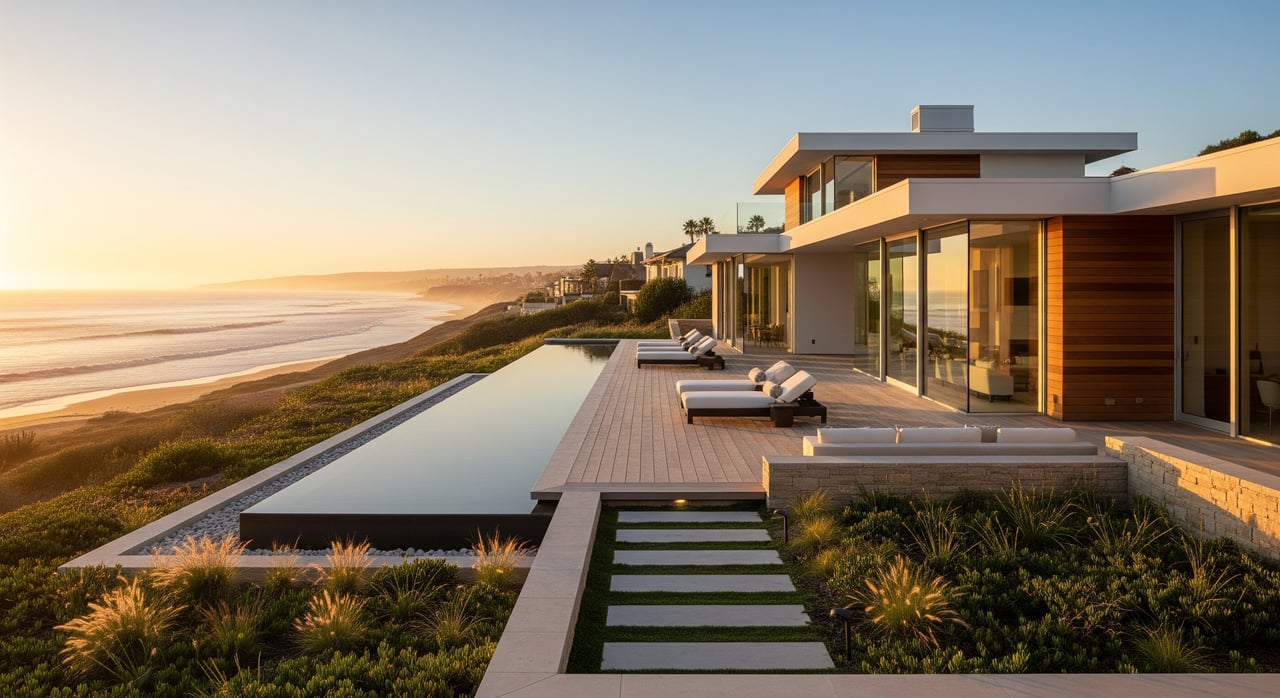
Expect clean, rectilinear volumes, flat or low-slope roofs, and deep overhangs. Stepped floor plans follow sloped lots to reduce retaining walls and frame views. Courtyards and carved terraces create sheltered outdoor zones.
Buyer cues:
- Look for overhangs sized to shade large windows.
- Favor stepped layouts that respond to the site.
Glazing and openings
Expansive glass captures ocean light and views. Sliding or folding doors, fixed view windows, and clerestories are common. Large glass areas can add heat gain and glare, and coastal air can corrode hardware.
Quality indicators:
- High-performance glazing such as low-e and laminated glass.
- Thermally broken aluminum or fiberglass frames with marine-grade hardware.
- Well-detailed thresholds and recessed tracks for smooth, flush transitions and water control.
Vocabulary to know: low-e, laminated glass, tempered safety glass, thermally broken frame, clerestory, bifold doors.
Materials and detailing
Expect a natural palette: smooth stucco, warm woods like cedar or ipe, concrete, engineered stone, and dark metal accents. Near the ocean, durability matters.
Buyer cues:
- Fiber-cement siding, rainscreen cladding, and powder-coated metal resist moisture.
- Composite or ipe decking stands up to salt and sun.
- Ask for manufacturer info, warranties, and recent exterior maintenance records.
Indoor–outdoor living
Large openings connect great rooms to patios, roof decks, and outdoor kitchens. Overhangs, pergolas, and operable screens temper sun and wind. Seamless flooring and flush door tracks blur boundaries.
Buyer cues:
- Check drainage slopes, slip-resistant surfaces, and salt-tolerant finishes.
- Confirm outdoor kitchens, decks, and roof decks are permitted.
Site-responsive design
Strong projects orient living areas to views and breezes, place bedrooms away from wind and noise, and step with the grade. On bluff or steep lots, geotechnical design and engineered foundations replace heavy fill.
Buyer cues:
- Ask for geotechnical reports for sloped or bluff-adjacent sites.
- Prefer solutions that work with the land, not against it.
Rules and permits to know
Encinitas coastal properties sit within a layered regulatory environment. The City’s Planning Division administers the Local Coastal Program and permits that guide development near the shore. Review current submittal and coastal zone requirements with the Encinitas Planning Division.
State-level policies shape what can be built and where. The California Coastal Commission provides guidance on bluff setbacks, erosion risk, and public access. Energy standards under California’s Title 24 influence insulation, window performance, and solar readiness for new homes and major remodels. You can review the Building Energy Efficiency Standards at the California Energy Commission.
Floodplains and sea-level rise also matter. Check FEMA Flood Insurance Rate Maps via the FEMA Flood Map Service Center, and review sea-level rise planning resources from NOAA. Structural and seismic requirements follow the California Building Code and local amendments overseen by the California Building Standards Commission. For hazard mapping and geotechnical context, consult the California Geological Survey.
Practical takeaway: many coastal projects require geotechnical studies, coastal permits, and careful documentation for decks and rooftop spaces. Unpermitted work can affect resale and insurance.
Performance and maintenance
Energy and comfort
Coastal Modern homes rely on passive strategies. Cross-ventilation, shading from overhangs and louvers, and clerestory daylighting help manage comfort. Title 24 standards often lead to efficient HVAC, tight building envelopes, and solar PV on new homes. Ask about insulation levels, window specs, and the age and capacity of HVAC and solar systems.
Water, landscape, and drainage
Drought-tolerant, native, and Mediterranean plant palettes reduce irrigation. Permeable paving helps with stormwater. On sloped sites, grading and drains are critical to prevent pooling and slope movement. Verify positive grading away from the foundation and visible drains on patios and driveways.
Marine durability
Salt, UV, and moisture accelerate wear. Expect more frequent inspection of metal railings and fasteners, periodic recoating of exterior wood and paint, and careful attention to sealants and joints. For homes very near the water, some metal systems may include sacrificial components to limit corrosion.
Hazards and insurance
Coastal hazards include bluff erosion, storm surge and flooding in low-lying areas, and higher wind and salt exposure. Insurance can cost more near the ocean, and flood coverage may be required in mapped zones. Confirm flood status, ask about prior claims, and consult an insurance broker early.
What adds value here
- Authentic view orientation with unobstructed sightlines.
- Seamless indoor–outdoor living. Flush thresholds and cohesive flooring.
- Marine-grade windows, doors, and exterior hardware.
- Durable cladding and decking chosen for salt and sun.
- Thoughtful site response. Stepped massing and engineered foundations.
- Modern systems and Title 24-aligned energy features. Solar PV is a plus.
- Permitted rooftop decks and terraces with legal access.
Red flags to avoid
- Proximity to an eroding bluff without recent geotechnical documentation.
- Unpermitted additions, decks, outdoor kitchens, or rooftop structures.
- Inferior glazing that shows corrosion, seal failure, or glare issues.
- High-maintenance exterior choices that already show deferred upkeep.
How to evaluate a listing
Use this quick checklist during showings and due diligence.
- Glazing and thresholds: Look for low-e or laminated glass callouts. Inspect frames and door tracks for corrosion and water intrusion.
- Exterior cladding and fasteners: Check for rust streaking, blistered paint, rot, or stains at window and roof-to-wall joints.
- Roof and drainage: Confirm gutters and downspouts move water away from the foundation.
- Site grading: Verify positive slope away from the home and visible drains on sloped lots.
- Permits: Request permit history and final inspections for additions, decks, and major systems.
- Structure and geotech: For bluff or steep sites, review geotechnical and structural reports.
- Mechanical and energy: Note HVAC age and capacity. Ask for insulation documentation and window specs.
- Landscaping and irrigation: Look for drought-tolerant choices and functioning irrigation. Prefer permeable hardscape.
Specialists worth engaging
- Geotechnical engineer for sloped or bluff-adjacent properties.
- Structural engineer for nonstandard foundations or cantilevers.
- Coastal permit specialist or land-use attorney if history is unclear.
- Home inspector with coastal and modern-construction experience.
- Insurance broker for flood and coastal coverage options.
Is Coastal Modern right for you
If you value light, clean lines, and indoor–outdoor living, Coastal Modern fits Encinitas beautifully. The key is pairing design with durability and proper permits. With the right team and due diligence, you can enjoy ocean living while protecting long-term value.
Ready to explore Coastal Modern homes or position yours for a premium sale outcome. Connect with the Modern Homes Team for design-literate representation and editorial-quality marketing.
FAQs
What defines Coastal Modern homes in Encinitas
- Clean forms, expansive glass, deep overhangs, and low-maintenance outdoor rooms that maximize views and breezes in a coastal climate.
Which permits impact coastal remodels in Encinitas
- Projects in the coastal zone may require city approvals and adherence to Local Coastal Program policies, with state guidance from the California Coastal Commission.
How do I check a property’s flood risk
- Enter the address in the FEMA Flood Map Service Center and review any local disclosures with your agent and insurer.
Do new homes need solar under Title 24
- Many new homes meet energy standards with solar PV and efficiency measures. Review requirements at the California Energy Commission.
What window materials hold up near the ocean
- Thermally broken aluminum or fiberglass frames with marine-grade hardware and low-e or laminated glass typically perform well in marine environments.
How often should exterior finishes be maintained
- Plan for more frequent inspections, periodic recoats of wood or paint every few years, and proactive replacement of corroding fasteners or hardware.