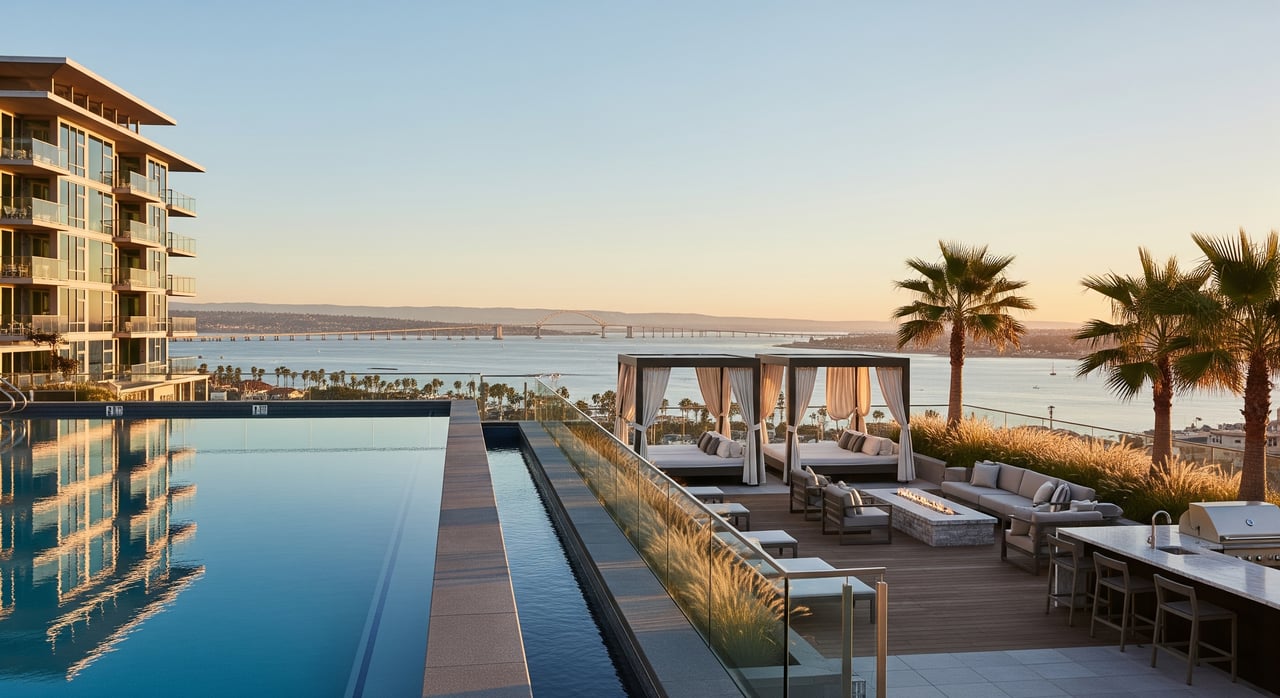
Looking for a turnkey coastal lifestyle without the upkeep of a standalone home? Coronado’s luxury condo buildings pair resort-style amenities with lock-and-leave ease, a strong draw for second-home buyers and downsizers. You want an honest picture of what you actually get, how it differs by location, and what to verify before you buy. This guide breaks down the amenities that matter, HOA costs and rules, coastal factors, and a practical due diligence checklist so you can choose with confidence. Let’s dive in.
Coronado luxury amenities at a glance
Not every building offers everything. Use these core categories to compare options and focus on what fits your lifestyle.
Waterfront and beach access
- Beachfront access: Buildings on the Pacific side often offer controlled pathways to the sand and surf-focused outdoor spaces.
- Bayfront access: Along Glorietta Bay, you’ll find calmer waters, marina proximity, and promenade-style waterfronts designed for boating and sunsets.
Concierge and security
- Staffing: Many premium buildings offer a 24/7 lobby attendant or concierge, controlled entry, and guest check-in.
- Valet and assistance: Some developments provide valet parking and luggage or grocery assistance for added convenience.
Wellness and recreation
- Fitness: Modern gyms, studio space for classes, and wellness rooms are common in higher-end properties.
- Pools and spa areas: Indoor or outdoor pools, often heated, plus hot tubs, saunas, and steam rooms.
- Outdoor recreation: Tennis or pickleball courts, landscaped paths, and rooftop terraces for fresh-air living.
Spa, hospitality, and social spaces
- Lounge and club rooms: Owners’ lounges, club spaces, and sometimes wine storage or tasting rooms.
- Guest suites: Select buildings offer rentable guest suites, a smart perk for hosting family and friends.
Marine, parking, and transportation
- Marina options: Private docks and marina access are most common in Coronado Cays and other bayfront settings.
- Parking: Secure garage parking, guest stalls, and EV charging are typical considerations in newer or updated properties.
Turnkey services and owner conveniences
- Onsite management: Daily operations, routine maintenance programs, and coordinated repairs enhance day-to-day ease.
- Home services: In-unit housekeeping or linen services may be available through concierge partnerships in select buildings.
- Storage: Dedicated package rooms, bike storage, and owner lockers.
Building-scale finishes and infrastructure
- Private arrivals: Private elevators or secured foyers add privacy and convenience.
- Architecture and finishes: Large terraces, panoramic windows, and high-end appliance packages are common in luxury units.
- Integrated tech: Smart-home wiring, robust HVAC, and construction focused on sound attenuation for quiet living.
Where amenities cluster by location
Coronado’s luxury condo offerings vary by neighborhood and building type. Know where to look for the amenities you want.
Beachfront complexes
- Focus: Direct beach paths, multiple pools, year-round staffing, and expansive common areas.
- Best for: Buyers seeking a surf-side experience with full services and recreational options on site.
Bayfront condominiums
- Focus: Protected views, marina access or nearby docking, and calmer-water recreation.
- Best for: Boating enthusiasts and sunset seekers who value a quieter waterfront.
Village and historic downtown buildings
- Focus: Walkable access to shops and dining, rooftop or courtyard gathering spaces, boutique-scale services.
- Best for: Downsizers prioritizing location and convenience over large-scale resort amenities.
Coronado Cays marina community
- Focus: Private docks, neighborhood marina culture, and community green spaces and trails.
- Best for: Buyers who need boat access or prefer a marina-centered lifestyle.
HOA costs and what dues really cover
HOA dues vary widely across Coronado, driven by staffing, amenities, and coastal operating costs. Always verify current dues for the specific unit.
What dues typically include
- Operations: Landscaping, pool and spa upkeep, common-area utilities, and building maintenance.
- Staffing: Concierge, security, and onsite management where offered.
- Financial health: Contributions to reserves for future capital projects.
Why fees vary by building
- Service level: Full-service buildings with heated pools, valet, and year-round staffing often have higher dues.
- Complexity: Climate-controlled common areas, marina or dock maintenance, and larger properties raise costs.
- Scale: Boutique buildings with fewer amenities may have dues in the lower range, while full-service beachfront towers can run well into four digits monthly.
Reserves, assessments, and upcoming projects
- Reserve study: Ask for the most recent study to see planned capital items like roofing, exterior paint, elevators, and pool systems.
- Special assessments: Review recent board minutes and budgets to identify any approved or anticipated assessments.
Insurance and coastal exposures
- Master policy: Confirm what the association insures versus what owners must carry for interiors and contents.
- Flood factors: Some addresses in low-lying zones may require flood coverage. Check lender requirements and the property’s flood designation.
Rental rules and short-term stays
- Policies vary: HOA CC&Rs and City of Coronado rules set minimum stays or limits. Some buildings cap rentals or prohibit short-term rentals.
- Second-home tip: Verify both HOA policy and city regulations before you buy if rental flexibility matters.
Management and governance
- Who manages: Professional management usually supports consistent service and recordkeeping.
- Rules to review: CC&Rs, bylaws, and house rules affect pets, guests, renovations, and leasing.
Coastal durability and long-term planning
Waterfront living brings unique maintenance and planning considerations that affect value and operating costs.
Salt air and materials
- Corrosion risk: Salt accelerates wear on metal, seals, railings, and mechanical systems.
- What to check: Maintenance cycles and service histories for HVAC, elevators, garage ventilation, and exterior metalwork.
Flooding, sea-level rise, and site protections
- Flood zones: Verify FEMA flood zone designation for your address and any mitigation strategies in place.
- Future planning: Review regional sea-level projections and local planning documents for long-term context.
Stormwater, drainage, and shoreline work
- Recent storms: Ask whether recent weather events led to repairs or coastal defense upgrades, and how they are funded.
Mechanical systems and pools
- Service life: Coastal conditions can shorten the life of rooftop equipment and pool systems.
- Records: Request maintenance logs and replacement schedules for major systems.
Sound transmission and privacy
- Construction type: Concrete structures, quality glazing, and insulated assemblies help reduce noise.
- Orientation: Terraces and window placement influence exposure to traffic or beach activity.
Accessibility and aging in place
- Everyday ease: Evaluate elevator access, thresholds, and bathroom layouts for barrier-free living.
- Services: Ask about in-building accessibility services or accommodations.
Turnkey quality: how to spot it
A polished staging job is appealing, but true turnkey value shows up in the details you cannot see at first glance.
Visible, high-quality finishes
- Appliances and cabinetry: Look for integrated refrigeration, premium appliance brands, stone or engineered stone countertops, and custom soft-close cabinetry.
- Flooring: Wide-plank hardwood or stone tile, with engineered options that handle coastal humidity well.
- Smart features: Automated shades, multi-zone HVAC controls, and integrated security or AV wiring.
Beyond the surfaces
- Systems first: Electrical panel upgrades, recent HVAC, newer windows and doors, and documented renovation work.
- Maintenance: Service contracts, clean inspection reports, and transferable warranties add real value.
Services to confirm
- Optional support: Housekeeping, linen service, concierge reservations, and on-demand property management, if available.
- Included vs. add-on: Clarify what is part of HOA dues and what is paid per use.
Noise and privacy checks
- Sound attenuation: Ask about construction assemblies or added soundproofing around media walls.
- House rules: Understand any restrictions intended to maintain quiet enjoyment.
Buyer due diligence checklist
Before you write an offer, assemble a complete picture of the building’s operations and the unit’s true condition.
Documents to obtain
- Unit-specific: Seller property disclosures, appliance and finish inventory, renovation permits and plans, warranty transfer documents.
- Association: Current budget and last two years of financials, most recent reserve study, the last 12 months of board meeting minutes, CC&Rs, bylaws, house rules, master insurance declarations, current HOA fee schedule, and minutes addressing capital projects.
- Regulatory: Short-term rental policies and any city permit information, plus the property’s flood zone and related insurance guidance.
Inspections and specialists
- Building and unit: A full inspection by a professional familiar with coastal properties.
- Mechanical: HVAC and pool/spa equipment evaluations as needed.
- Coastal engineering: A structural or coastal engineer for oceanfront or seawall-adjacent properties.
- Pest: Termite inspection, especially for older buildings.
- Financial review: An advisor for associations with weak reserves or major projects on the horizon.
Questions to ask the HOA and seller
- What does the master insurance policy cover, and what are current premiums and deductibles?
- Any special assessments in the past 2 years or planned within 2 to 5 years?
- Are short-term rentals allowed, and what are minimum stay rules and permit or tax requirements?
- Who manages day-to-day operations, and is there an onsite manager?
- Which utilities and services are included in monthly dues?
- Any ongoing or expected litigation involving the association?
Bay vs. ocean: choose your lifestyle
Both sides of the island offer special benefits. Your day-to-day routine should guide your choice.
- Oceanfront: Direct sand access, vibrant beach energy, and resort-style amenities. Expect more surf activity and an emphasis on outdoor recreation.
- Bayfront: Calmer waters, marina and boating access, and protected views. The vibe is more serene, with a focus on sunset promenades and dock life.
Your next step
If you want a refined, low-maintenance home base in Coronado, start with your must-have amenities, then verify the building’s financial health and coastal readiness. A focused search saves time and helps you secure a residence that lives well today and holds value tomorrow. For curated guidance, private tours, and design-literate advice on finishes, services, and HOA health, connect with the Modern Homes Team.
FAQs
What amenities do Coronado beachfront condo buildings usually include?
- Expect direct beach access, multiple pools, staffed entry, and social spaces that support an active, surf-oriented lifestyle.
How much are HOA dues in Coronado luxury condo buildings?
- Dues vary from lower fees in boutique buildings to four digits monthly in full-service towers, reflecting staffing, amenities, insurance, and reserves.
Are short-term rentals allowed in Coronado luxury condo buildings?
- It depends on the HOA’s CC&Rs and City of Coronado rules; confirm minimum stay requirements, permits, and tax obligations before you buy.
What should second-home buyers check about flood risk in Coronado condos?
- Verify the FEMA flood zone for the address, review the master insurance policy, and confirm whether lenders will require separate flood insurance.
How can I tell if a Coronado condo is truly turnkey?
- Look beyond staging for recent system upgrades, service records, transferable warranties, and clear documentation of renovations and maintenance.