What looks like a simple beach-home question in 92109 often turns into a much bigger ownership decision. If you are weighing Pacific Beach against Mission Beach, the real issue is not just location or style. It is how you want to use the property, what San Diego allows, and whether your plan fits the building, the block, and the rules. This guide will help you sort through the key tradeoffs so you can decide whether a vacation-rental strategy or a true personal home makes more sense. Let’s dive in.
Pacific Beach vs. Mission Beach
Pacific Beach and Mission Beach may sit side by side, but they function differently as ownership products.
Pacific Beach is a larger mid-coastal community with both ocean and bay frontage. The City of San Diego describes it as a beach town with nearly 47,000 residents, about 1,500 businesses, and heavy summer beach activity. In practical terms, that creates a broader mix of residential and commercial uses.
Mission Beach is a two-mile sandbar and one of San Diego’s most densely developed residential communities. Many homes date to the 1930s and 1940s, and the area is defined by very small lots, high density, limited vehicle circulation, and extensive pedestrian paths. That physical layout helps explain why Mission Beach often feels more boardwalk-centered and visitor-oriented.
Start With Your Use Case
Before you look at architecture, views, or rental projections, define how you actually want to live with the property. In 92109, intended use often matters more than the listing description.
For most buyers, the decision usually falls into one of three paths:
- A primary residence with some short-term rental flexibility
- A whole-home property outside Mission Beach that fits San Diego’s Tier 3 rules
- A second home that is not expected to produce short-term rental income
That last category matters more than many buyers expect. If your real goal is privacy, personal use, and a clean ownership experience, forcing an income strategy onto the wrong property can create more friction than value.
San Diego STRO Rules Matter Most
San Diego defines a short-term residential occupancy, or STRO, as occupancy of a dwelling unit or part of one for less than one month. The city’s ordinance applies regardless of base zoning, so you cannot assume beach zoning automatically allows your rental plan.
The city also limits each host to one STRO license and one dwelling unit at a time within the City of San Diego. Licenses are not transferable between properties or owners. If you are underwriting future flexibility, that detail is important.
Understand the Four Tiers
San Diego’s STRO framework is organized by license tier, not just by neighborhood.
- Tier 1 is a part-time option for 20 days or less per year, with no onsite residence requirement.
- Tier 2 is for home sharing in a host’s primary residence. The city states that the host may be absent up to 90 days per calendar year, and if the home is the host’s primary residence for at least 275 days per year, Tier 2 may still allow up to 70 days of whole-home STRO.
- Tier 3 covers whole-home STRO outside Mission Beach.
- Tier 4 covers whole-home STRO in Mission Beach.
The 21-to-89-Day Trap
One of the most important planning points is easy to miss. A plan to rent a whole-home beach property for 21 to 89 days per year is not allowed unless the property qualifies as the host’s primary residence under Tier 2.
That means many “part-time rental” assumptions do not fit the actual rules. If you are not buying a primary residence, you typically need to think in terms of either very limited use under Tier 1 or a full whole-home framework under Tier 3 or Tier 4.
Mission Beach Is the Tightest Market
Mission Beach is the most restrictive path for whole-home vacation-rental buyers right now. Tier 4 licenses are capped at 30% of Mission Beach housing units, and as of May 8, 2026, there were 0 licenses remaining and the application period was closed.
By contrast, Tier 3 applies outside Mission Beach and was showing 856 licenses remaining on that same date. If your ownership plan depends on whole-home short-term rental use, that difference is not a minor detail. It can change whether a property works for your goals at all.
What This Means for Pacific Beach Buyers
Pacific Beach generally offers a cleaner decision tree. If the property is outside Mission Beach and otherwise qualifies, a whole-home STRO path may fall under Tier 3 rather than Tier 4.
That does not mean every Pacific Beach property is suitable for short-term rental use. It means the licensing environment is typically more workable than Mission Beach for buyers considering whole-home rental use, subject to city rules, property specifics, and any HOA restrictions.
For many buyers, Pacific Beach also supports a stronger lifestyle balance. You still get the energy of a highly active coastal neighborhood, but often with a wider range of residential settings than the narrow, high-density pattern common in Mission Beach.
What This Means for Mission Beach Buyers
Mission Beach can be compelling if you want classic beach character, direct proximity to the boardwalk, and a distinctly coastal experience. But if your purchase depends on whole-home short-term rental income, you need to approach it with caution.
Because Tier 4 had no remaining licenses as of May 8, 2026, a buyer should not assume they can buy first and solve licensing later. In Mission Beach, the licensing constraint is central to the investment thesis.
For some buyers, that shifts the best use from “vacation rental property” to “personal beach home” or long-term hold. In other words, Mission Beach may still be an excellent ownership choice, but for a different reason than expected.
Income Potential Needs a Real Underwrite
San Diego has an active short-term rental market. A citywide AirDNA snapshot showed about 15,524 active listings, 60% occupancy, a $333.7 average daily rate, and roughly $39,000 in annual revenue, with 88% of listings categorized as entire homes.
Those numbers are a broad baseline, not a guarantee for a specific property in Pacific Beach or Mission Beach. Design, location, building type, parking, license status, seasonality, and operating intensity all affect actual performance.
You also need to model revenue after local taxes and fees. San Diego’s Transient Occupancy Tax rate increased effective May 1, 2025 and ranges from 11.75% to 13.75% depending on the property’s tax zone, so buyers should verify the parcel’s exact zone before underwriting income.
Fees and Compliance Add Up
City compliance is part of the ownership equation, not an afterthought.
As of March 1, 2025, San Diego posted the following nonrefundable application and license fees:
- Tier 1: $33 application, $193 license
- Tier 2: $33 application, $284 license
- Tier 3 and Tier 4: $41 application, $1,129 license
Licenses expire after two years. Before operating, the city also requires an active Transient Occupancy Tax certificate, collection and remittance of TOT, and a Rental Unit Business Tax account once rentals exceed six days in a calendar year.
Building Type Can Change the Answer
In coastal San Diego, the property itself can make or break your plan.
San Diego prohibits using ADUs as short-term rentals. Live/work units may only be used for STRO in the residential live portion, not the work portion. Those rules can affect newer or more specialized housing formats, especially when buyers assume every flexible-looking coastal property can generate short-term income.
Condo and townhome buyers also need to look beyond city legality. Under California Civil Code section 4741, a common-interest development may still adopt and enforce rules that prohibit transient or short-term rentals of 30 days or less. So a property can be city-legal for STRO and still be blocked by the HOA.
Coastal Review and Remodel Risk
If you are buying with plans to renovate, expand, or materially change the property, coastal review belongs in your diligence from day one.
The City of San Diego notes that a project in the Coastal Overlay Zone may require a Coastal Development Permit before construction permits are issued. The city also states that the appealable coastal area is generally between the first public roadway and the ocean, and that a Zone History Letter can help confirm past and current zoning and redevelopment rights.
Some beach parcels also fall within the Parking Impact Overlay Zone, which adds supplemental parking regulations. In compact coastal neighborhoods, parking rules can influence both design decisions and day-to-day usability.
Lifestyle Tradeoffs Are Real
Both Pacific Beach and Mission Beach are highly active beach communities. Pacific Beach is one of the busiest beach areas in San Diego and draws large summer crowds, while Mission Beach is designed to accommodate both residents and visitors around the boardwalk and summer beach activity.
That means an STR-heavy ownership model can feel less private and more operationally demanding than buyers initially imagine. Turnover, guest logistics, tax compliance, parking considerations, and neighborhood intensity all shape the experience.
If you want a property that feels like a retreat, a home-first strategy may be the better fit. If you are comfortable with a more hands-on, business-like model, then a properly qualified rental path may still work, especially outside Mission Beach.
A Smart 92109 Buying Checklist
Before you get serious about any candidate property in Pacific Beach or Mission Beach, verify these four items:
- STRO tier eligibility for your intended use
- HOA rules if the property is in a common-interest development
- Coastal permit exposure for any planned remodel or addition
- Primary residence vs. whole-home rental use so your strategy matches the city’s rules
In 92109, these details often matter more than staging, curb appeal, or even a strong first impression. A beautiful property is only the right property if it supports the way you plan to own it.
Which Path Fits Best?
If you want flexibility and a clearer path to whole-home short-term rental use, Pacific Beach will often present more workable options than Mission Beach. If you want classic boardwalk-adjacent ownership and are comfortable prioritizing personal use over vacation-rental income, Mission Beach can still be a compelling choice.
The key is to buy with the rules, not against them. When you line up neighborhood, building type, license path, and lifestyle goals from the start, you make a much better decision and avoid expensive surprises later.
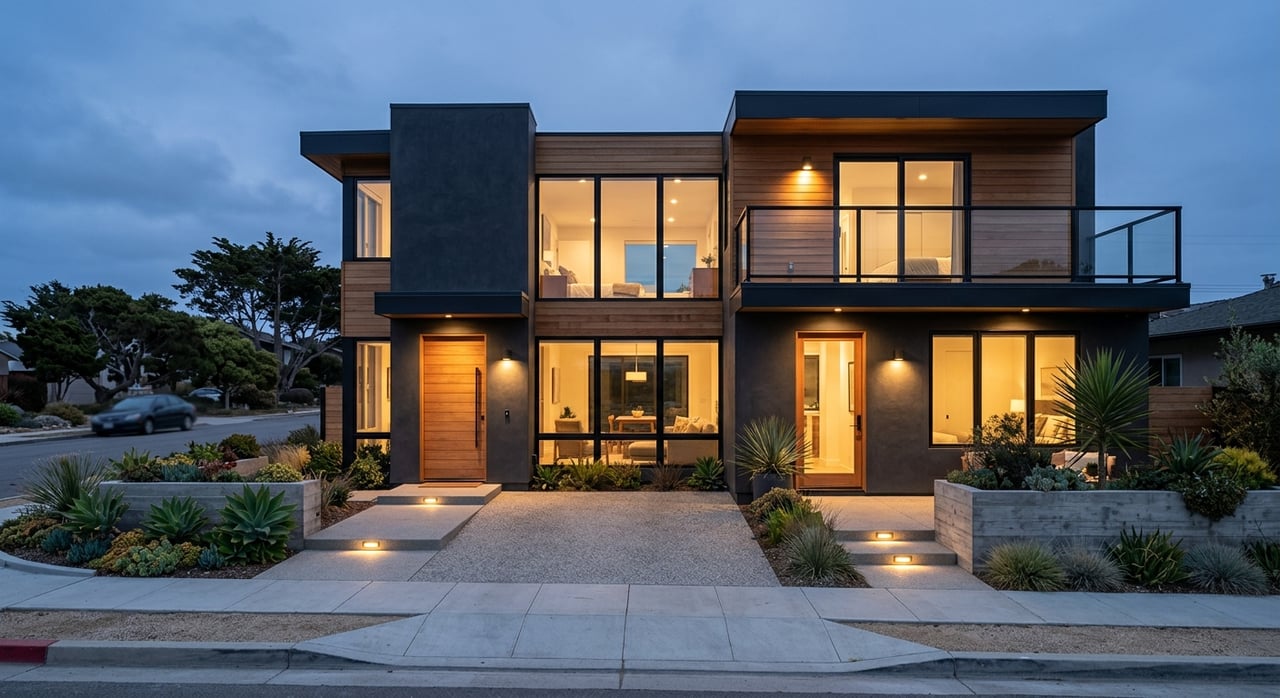
If you are considering a design-forward coastal purchase in 92109, Modern Homes Team can help you evaluate not just the home, but the ownership strategy behind it.
FAQs
What is the difference between Pacific Beach and Mission Beach for ownership?
- Pacific Beach is a larger mixed residential and commercial beach community, while Mission Beach is a denser two-mile sandbar with smaller lots, older housing stock, limited vehicle circulation, and a more boardwalk-centered feel.
Can you buy a Mission Beach home and use it as a whole-home vacation rental?
- You should verify current license availability first, because Mission Beach whole-home STRO use falls under Tier 4, and as of May 8, 2026, there were no Tier 4 licenses remaining and the application period was closed.
Can a Pacific Beach property work better for short-term rental use?
- In many cases, yes, because whole-home STRO outside Mission Beach falls under Tier 3 rather than Tier 4, but you still need to confirm city eligibility, intended use, and any HOA restrictions.
What short-term rental rules matter most in 92109?
- The key issues are the correct STRO tier, whether the home is a primary residence, whether whole-home use is allowed under that tier, license availability, and the rule that a host may operate only one dwelling unit at a time in the City of San Diego.
Can an HOA block short-term rentals in Pacific Beach or Mission Beach?
- Yes. A condo or townhome may be city-legal for STRO and still be prohibited by HOA governing documents that ban transient or short-term rentals of 30 days or less.
Do coastal properties in 92109 need extra permit review for remodels?
- They can. A property in the Coastal Overlay Zone may require a Coastal Development Permit before construction permits are issued, so buyers should review coastal permit exposure early in the process.
Are ADUs allowed as short-term rentals in San Diego?
- No. San Diego prohibits using ADUs as short-term rentals.
What should buyers verify before buying in Pacific Beach or Mission Beach?
- Confirm STRO tier eligibility, HOA rules, coastal permit exposure, and whether your intended use is a primary residence, a whole-home rental strategy, or a true second home.